Integrated bottle-to-pellet process
Coordinates sorting, crushing, intensive washing, drying, melt filtration, degassing and pelletizing in one project-specific solution.
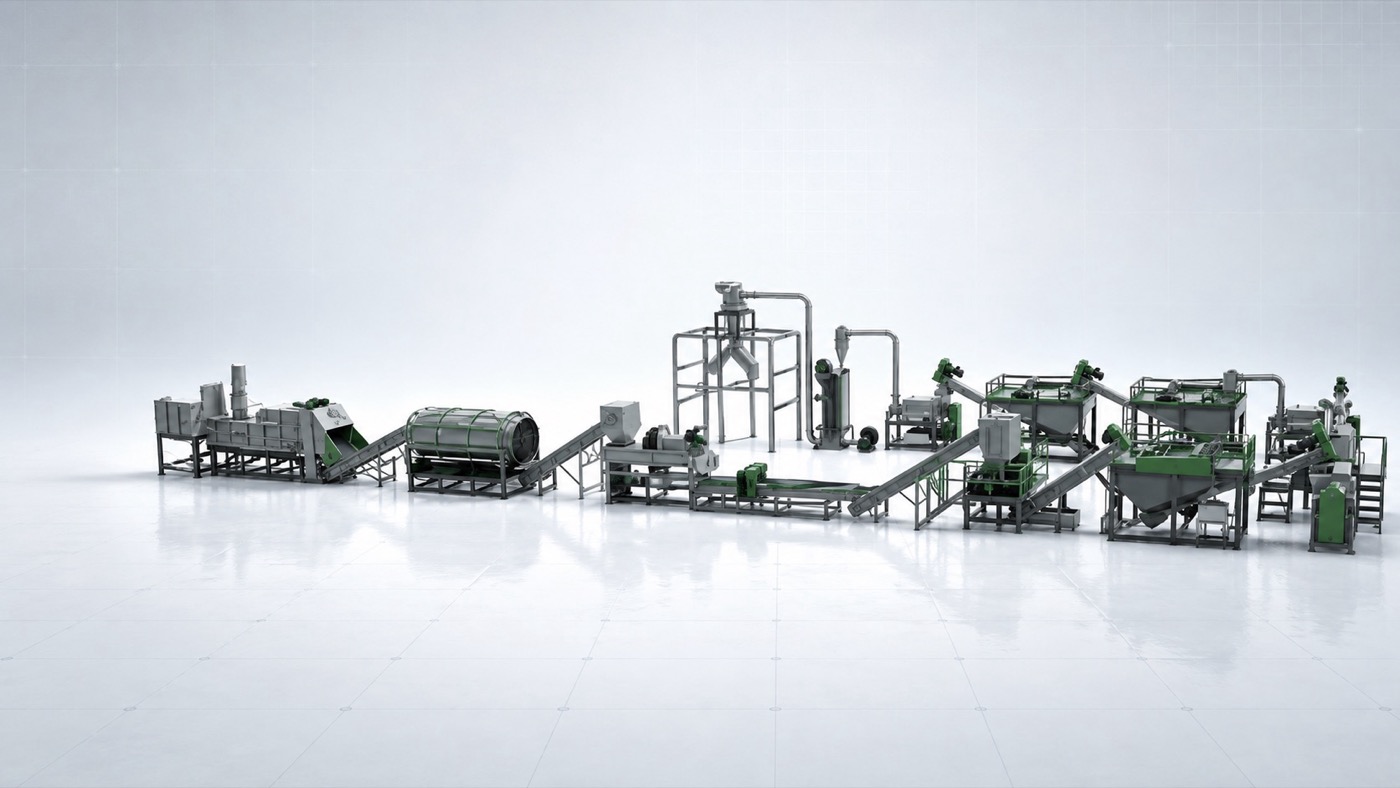
An integrated washing, purification and pelletizing solution engineered to convert post-consumer PET bottles into consistent rPET pellets for higher-value applications.
For configuration, capacity and quotation details, send us your material and output requirements.
The Sanxing Food Grade rPET PET Bottle Recycling Washing & Pelletizing Production Line is an integrated solution for converting sorted post-consumer PET beverage bottles into clean PET flakes and consistent recycled PET pellets. The line combines bottle preparation, size reduction, intensive washing, separation, drying, melt filtration, vacuum degassing and pelletizing in one coordinated production concept.
This solution is intended for recyclers planning higher-value rPET applications, including bottle-to-bottle projects, food and beverage packaging, PET sheet, strapping and other demanding uses. Every project is configured around the customer’s incoming bottle quality, contamination level, required throughput, target pellet properties, available utilities and local compliance requirements.
The system accepts sorted PET bottle bales or loose PET bottles and produces washed PET flakes or pelletized rPET, depending on the selected configuration. Labels, caps, glue, sand, residual liquids, fines and non-PET materials are progressively removed. The prepared flakes are then dried and fed to an extrusion pelletizing section where the melt is filtered, degassed and cut into uniform pellets.
For projects targeting food-contact or bottle-to-bottle applications, additional decontamination, resin treatment, online quality control and solid-state polycondensation may be required. Sanxing reviews these requirements during project engineering. Final food-contact approval is determined by the complete validated process, feedstock control, operating conditions and the regulations of the destination market.
A typical line can include bale opening, trommel or pre-cleaning, label removal, manual or automatic sorting, wet crushing, sink-float separation, hot washing, friction washing, multiple rinsing stages, centrifugal dewatering, thermal drying, flake sorting, crystallization or pre-drying, extrusion, fine melt filtration, vacuum degassing and pellet cutting. Equipment selection is adjusted to the material rather than using one fixed layout for every factory.
The modular design allows the washing section and pelletizing section to operate as one turnkey production line or as coordinated production modules. This approach makes future capacity expansion, maintenance planning and quality control easier for recycling plants.
Stable recycled PET quality begins with consistent sorting and washing. The line is designed to reduce PVC, polyolefins, labels, adhesive residues, metals, moisture and fine contamination before extrusion. Controlled drying helps protect PET during melt processing, while continuous filtration and vacuum degassing support cleaner, more uniform pellets.
Actual pellet color, intrinsic viscosity, contaminant level and application suitability depend on the incoming PET stream and the confirmed process configuration. Samples and target specifications should be reviewed before final equipment selection.
Sanxing Machine develops the line according to the customer’s raw material photos, sample analysis, hourly capacity, preferred automation level, water treatment plan, electrical standard and final rPET application. The project scope can cover line layout, equipment configuration, utility data, installation guidance, commissioning support and operator training.
To receive a practical proposal, send Lisa information about the bottle source, bale composition, contamination level, required output, target end product and available workshop dimensions.
Yes, after suitable sorting and feedstock preparation. The required sorting, label removal and washing intensity depend on the proportion of colored bottles, PVC, labels, caps, glue and other contamination.
The line can be engineered to support food-grade rPET production. Food-contact approval is not created by one machine alone; it requires a validated complete process, controlled feedstock, documented operating conditions, testing and compliance with the target market’s regulations.
SSP may be selected when the project requires decontamination and intrinsic-viscosity recovery or enhancement for demanding bottle-to-bottle applications. The need for SSP depends on the input material, extrusion process and target specification.
Capacity is project-specific. Sanxing configures equipment, utilities and layout according to the required kilograms per hour and the condition of the incoming bottles.
Coordinates sorting, crushing, intensive washing, drying, melt filtration, degassing and pelletizing in one project-specific solution.
The line is configured around bottle composition, contamination level, required throughput and target pellet quality.
Washing, separation, flake sorting, filtration and vacuum degassing help reduce labels, glue, polyolefins, fines, moisture and volatile contamination.
Controlled drying, melt processing and pellet cutting support consistent downstream handling and production.
Optional decontamination, quality-control and SSP modules can be evaluated for projects targeting food-contact or bottle-to-bottle applications.
Sanxing provides configuration guidance, layout planning, utility data, installation guidance, commissioning support and operator training.
Final parameters depend on raw material condition and the confirmed configuration.
Send material photos, expected capacity and final product requirements. We will recommend a suitable solution.
Leave your requirements below. Lisa will contact you with configuration and quotation details.